Why Microsoft Fabric is a Gamechanger for Modern Data Platforms
Many enterprise data platforms have evolved into complex ecosystems of disconnected systems, siloed reporting tools, and increasingly complicated data pipelines. As organizations grow, they often accumulate separate solutions for data integration, warehousing, analytics, governance, business intelligence, and AI.
While each tool may solve a specific challenge, together they can create operational complexity, duplicated effort, inconsistent data, and slower decision-making. In today’s AI-driven business environment, this is no longer just a technology concern. It is a strategic business challenge.
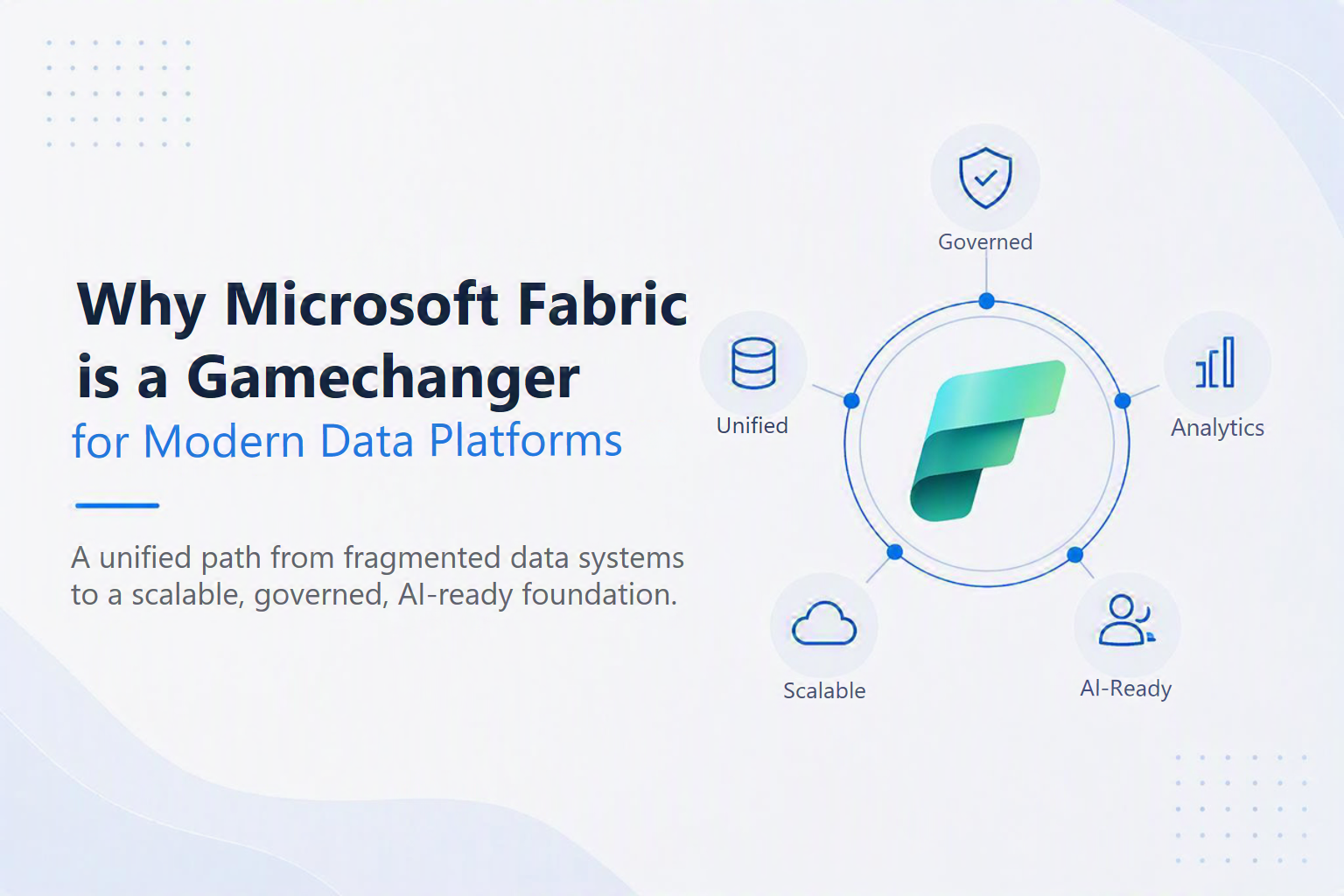
Microsoft Fabric transforms this landscape by bringing data integration, engineering, warehousing, analytics, governance, and business intelligence together in a single, unified platform. For organizations modernizing their analytics ecosystem, Fabric provides a streamlined path to a scalable, governed, and AI-ready data foundation.
Why legacy data platforms are getting harder to scale
Legacy analytics environments rarely fail overnight. Instead, they become increasingly complex over time.
As new data sources are added, business requirements expand, and reporting demands grow, organizations often respond by introducing additional tools, processes, and integrations. What begins as a manageable analytics environment can eventually become difficult to maintain and even harder to scale.
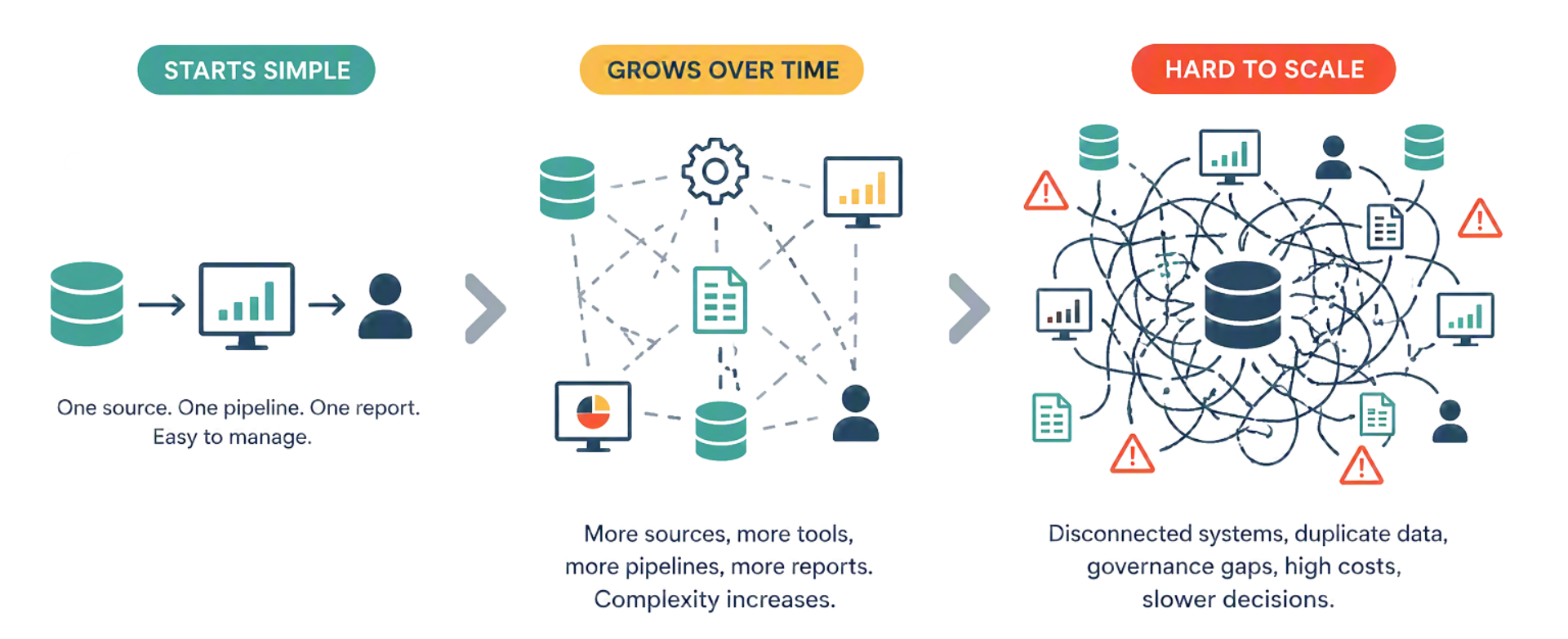
Complexity grows through disconnected systems
A new source system is introduced. A department requests additional reporting. Another team adopts a different BI tool. What starts as individual business needs gradually creates a fragmented ecosystem.
The result is a network of disconnected platforms, duplicated data movement, inconsistent business definitions, and growing administrative overhead. Over time, complexity becomes the biggest barrier to agility.
A migration can create the opportunity to address that accumulated complexity, but only when the existing architecture is reassessed rather than recreated. This distinction is especially important when moving from Jet Analytics to Microsoft Fabric, where preserving trusted business logic should not mean carrying every existing reporting layer, duplicated process, and technical workaround into the new environment.
Rising expectations from modern analytics and AI
Modern organizations need more than historical reports. Business users expect real-time visibility, self-service analytics, trusted KPIs, predictive insights, and AI-powered decision support.
However, many traditional data platforms were designed for different eras. They rely heavily on manual processes, frequent data extraction, reconciliation efforts, and multiple handoffs between systems. These inefficiencies slow delivery, increase costs, and limit innovation.
Challenges in governance, trust, and scalability
As data volumes, users, and analytics use cases continue to grow, many organizations face new challenges around governance, data quality, security, and trust.
This is one of the key reasons why Microsoft Fabric migrations are accelerating. Organizations are not simply replacing legacy technologies. They are simplifying architecture, eliminating redundancy, and creating a more modern analytics foundation.
Whether the starting point is a traditional data warehouse, disconnected BI environment, or multiple standalone analytics tools, the goal remains the same: to establish a scalable, governed platform that can support reporting, analytics, and future innovation.
How Microsoft Fabric brings the platform together
Microsoft Fabric brings together data engineering, data integration, warehousing, real-time analytics, data science, governance, and business intelligence into a single, seamless experience.
Instead of managing separate technologies across the analytics lifecycle, organizations can operate from a unified architecture powered by OneLake—Microsoft’s centralized data lake designed to serve all Fabric workloads.
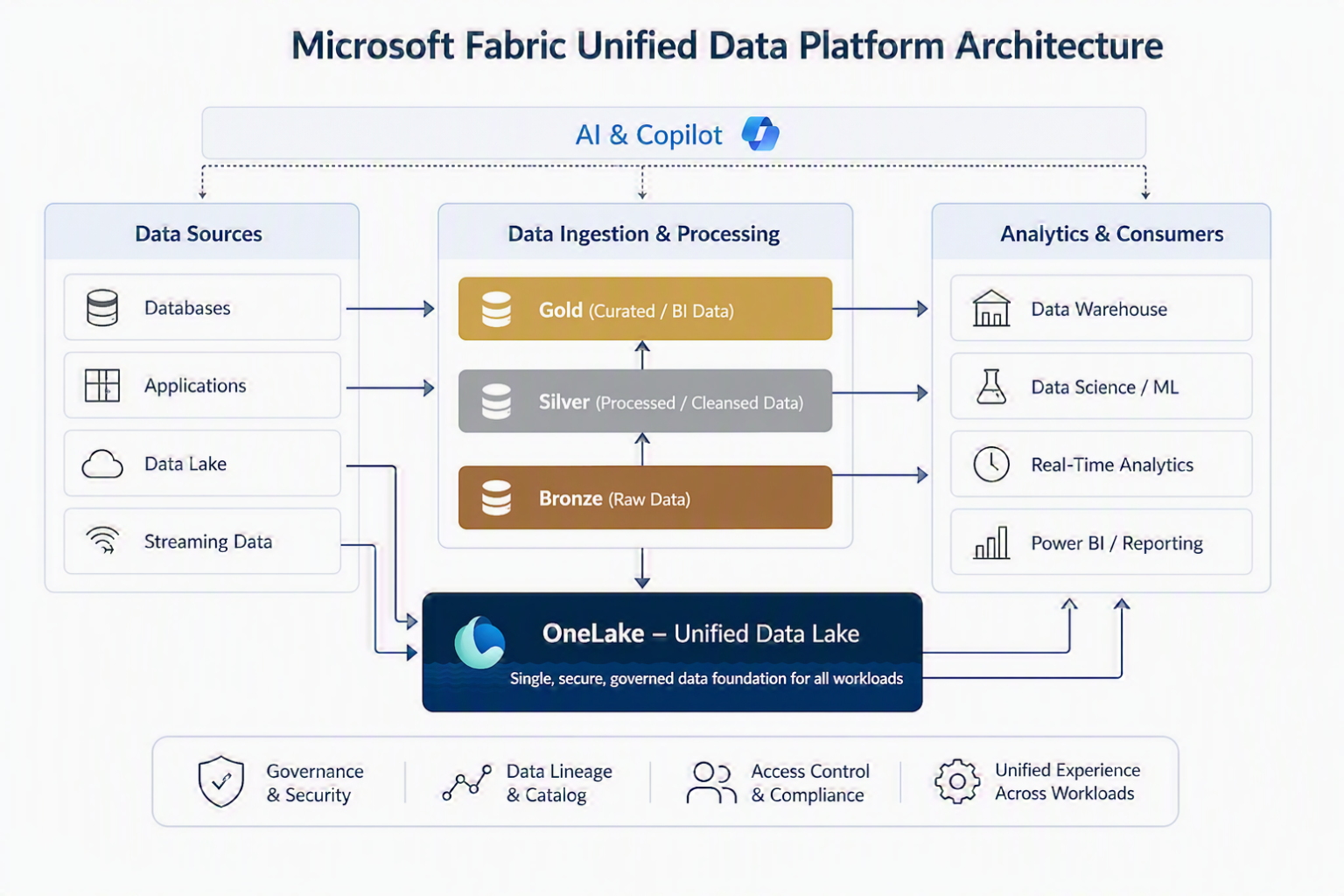
For organizations modernizing their analytics environments, Fabric is more than another technology investment. It is an opportunity to simplify the data landscape, improve governance, reduce duplication, and create an architecture built for scale and AI.
What this means for modern data platforms
The conversation is no longer about connecting more tools.
The real question is:
How do we build a trusted, scalable foundation that turns data into decisions faster?
Modern data platforms are increasingly measured by their ability to deliver trusted insights quickly, not simply by the amount of data they can store.
Reduced platform complexity
Microsoft Fabric significantly reduces the number of tools required to manage data integration, transformation, warehousing, analytics, and reporting.
A unified platform lowers operational overhead, simplifies architecture, reduces maintenance effort, and allows teams to focus more on delivering business value rather than managing integrations.
Stronger governance and trust

Successful analytics programs require both flexibility and control.
Fabric enables teams to work from shared data assets, consistent business definitions, governed semantic models, and trusted reporting layers. This helps minimize conflicting metrics, improve data quality, and increase confidence in decision-making.
Faster path from raw data to business-ready insights
In many legacy environments, data must pass through multiple systems before becoming available for analysis.
Fabric streamlines the journey from ingestion and transformation to modeling and reporting. By combining OneLake, integrated analytics services, and Power BI, organizations can move from raw data to actionable insights with fewer bottlenecks and significantly less complexity.
A stronger foundation for AI and future analytics
Microsoft Fabric is not just a reporting platform.
By providing unified data, consistent semantic models, real-time capabilities, and strong governance, Fabric creates the foundation required for enterprise AI.
As Fabric AI, Copilot experiences, and intelligent agents continue to evolve, organizations can leverage their governed data estate to power advanced analytics, automation, and AI-driven decision-making.
When data is fragmented, duplicated, or poorly governed, AI initiatives often struggle to scale. Fabric addresses this challenge by bringing data, governance, analytics, and AI readiness together within one connected platform.
Why this shift matters now
Modern data platforms are no longer optional.
Business leaders expect faster insights. Teams demand self-service analytics. Organizations must prepare their data foundations for AI adoption.
Adding more tools rarely solves these challenges. In many cases, it introduces additional integration points, increases data movement, and expands governance risks.
That is why forward-thinking organizations are shifting their focus from expanding technology stacks to simplifying the foundation underneath them.
Microsoft Fabric supports this transition by helping organizations build a unified, governed, and scalable analytics platform. For businesses already leveraging Microsoft Azure and Power BI, Fabric offers a particularly compelling path toward modernization.
What we are seeing in real enterprise modernization engagements
In many modernization initiatives, Microsoft Fabric adoption begins with a simple objective: simplify the existing environment.
Organizations typically start by consolidating reporting platforms, strengthening governance practices, reducing manual processes, and improving data accessibility. These early improvements often deliver immediate value through more reliable reporting, reduced operational effort, and faster access to business insights.
As adoption grows, organizations focus on modernizing data engineering practices by simplifying pipelines, reducing repetitive data movement, and creating more maintainable data flows.
Capabilities such as Fabric Data Factory, OneLake, Power BI, semantic models, and integrated governance become essential building blocks of a connected analytics ecosystem.
Once this foundation is established, organizations can begin unlocking higher-value opportunities including real-time analytics, advanced analytics, AI-powered automation, and intelligent decision support.
One example comes from a power and energy organization that transitioned from fragmented reporting processes, spreadsheet-driven analysis, and repeated data preparation activities to a centralized Microsoft Fabric platform with governed reporting and near real-time Power BI insights.
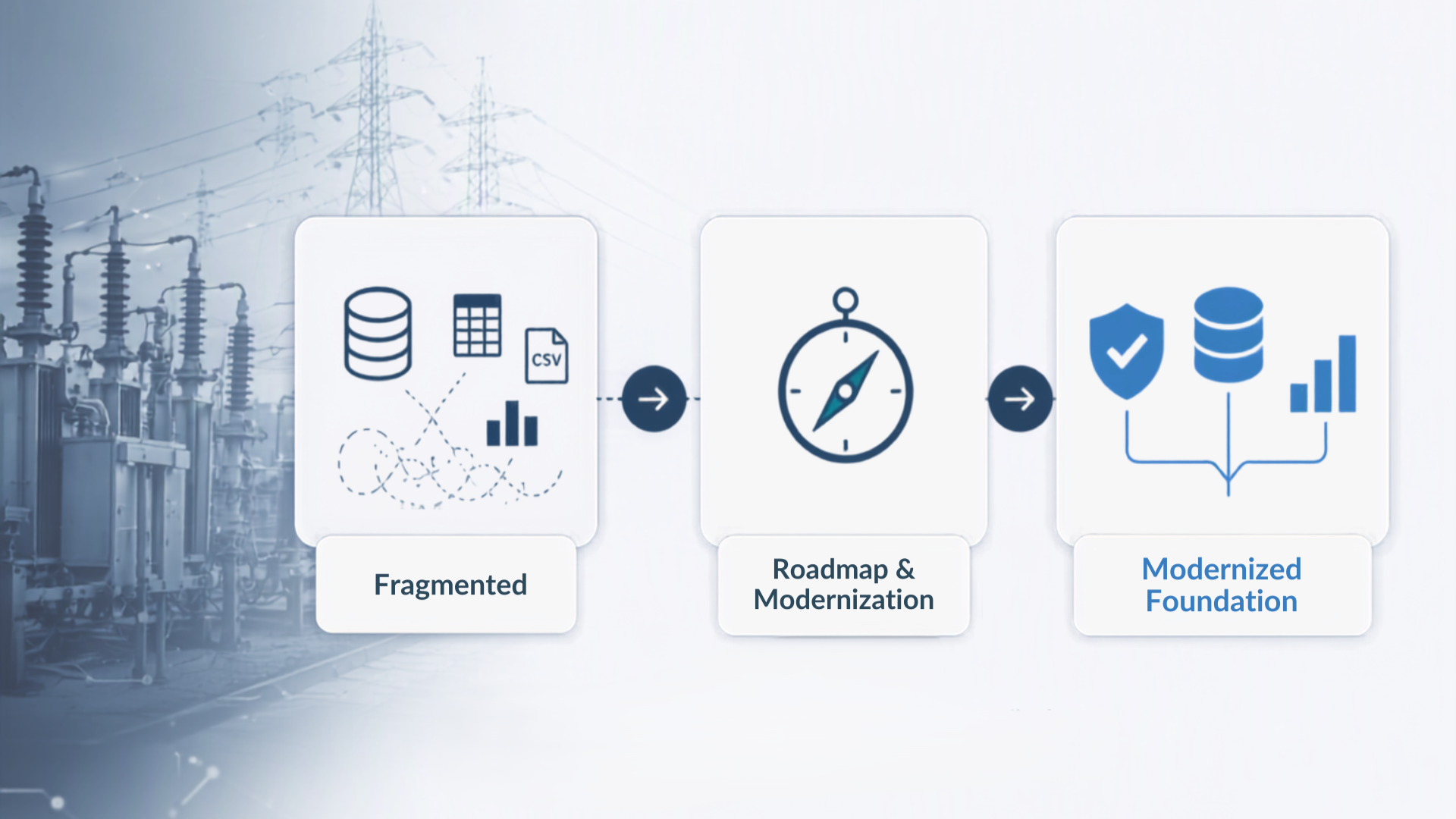
The outcome was clear: reduced effort spent reconciling data, greater confidence in reporting, improved governance, and a scalable foundation ready for future growth and AI initiatives
When Microsoft Fabric is the right modernization path?
Microsoft Fabric is particularly well suited for organizations whose data environments have outgrown their original architecture.
Common indicators include:
- Multiple analytics platforms performing overlapping functions
- Repeated movement and duplication of data
- Separate tools for integration, warehousing, reporting, and governance
- Increasing complexity in data management and reporting
- Growing demand for real-time analytics and AI capabilities
Fabric is especially attractive for organizations already using Microsoft technologies such as Azure, Power BI, Data Factory, or Synapse.
For businesses looking to modernize legacy SQL Server, SSIS, SSAS, SSRS, or fragmented BI environments, Fabric provides a practical route to simplifying architecture while improving governance, scalability, and innovation.
Building a Future-Ready Data Platform with Microsoft Fabric
Data modernization is no longer about introducing another reporting layer or replacing an isolated technology.
It is about creating a foundation that can evolve alongside the business.
Microsoft Fabric helps organizations achieve this by unifying data integration, data engineering, warehousing, analytics, governance, and business intelligence within a single platform.
The result is more than architectural simplification. Organizations gain trusted reporting, faster decisions, stronger governance, and a scalable platform capable of supporting future AI initiatives.
Modernization does not need to happen all at once.
Many successful Fabric journeys begin by addressing the most visible pain points—slow reporting cycles, duplicated data movement, disconnected analytics experiences, or governance challenges. From there, organizations can expand into real-time analytics, advanced analytics, and AI-driven innovation.

How VNB Can Help
At VNB Consulting, we help organizations assess, design, implement, and optimize Microsoft Fabric solutions that align both business objectives and technology strategies.
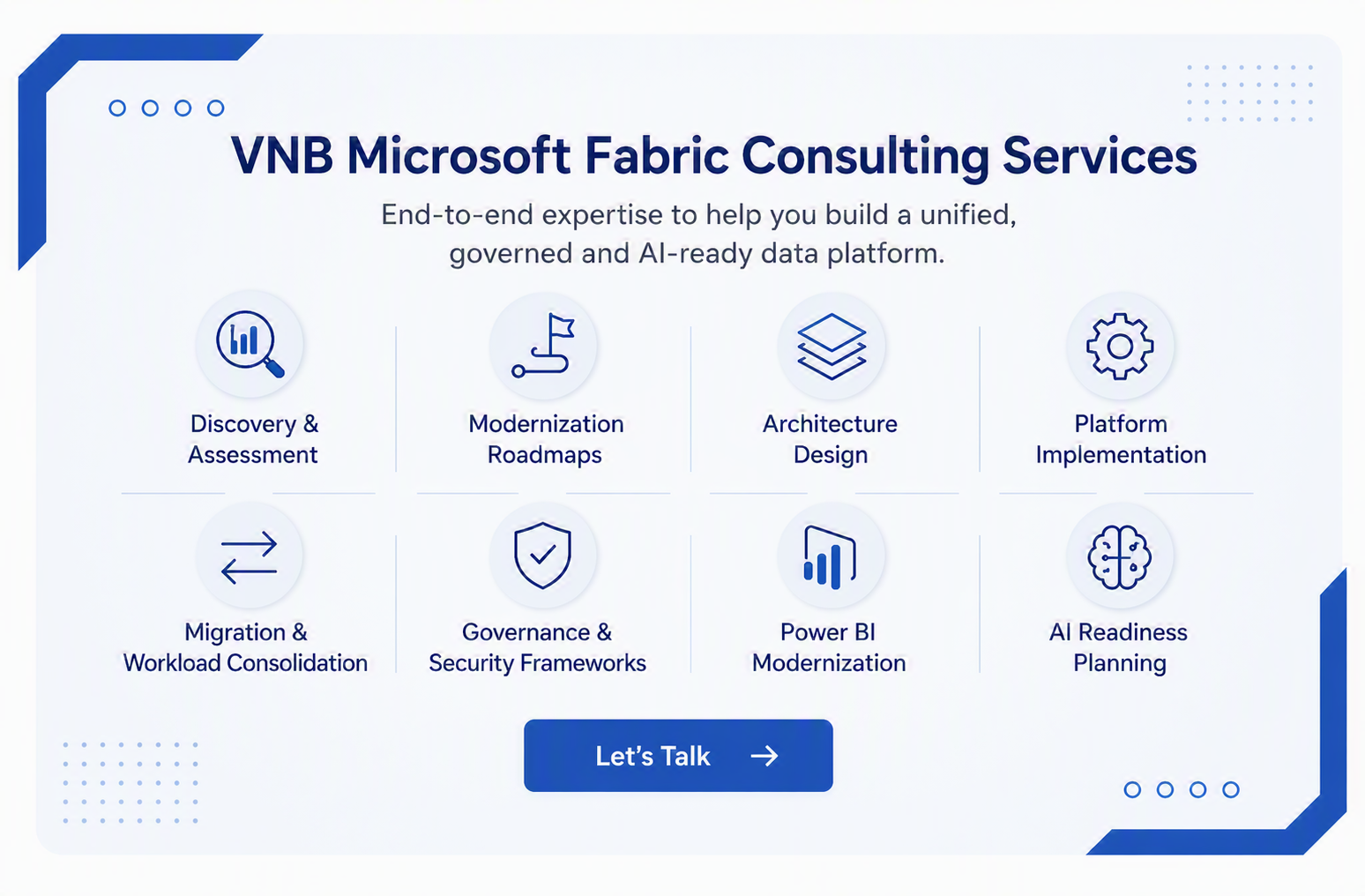
Our Microsoft Fabric consulting services include:
- Discovery and assessment
- Modernization roadmaps
- Architecture design
- Platform implementation
- Migration and workload consolidation
- Governance and security frameworks
- Power BI modernization
- AI readiness planning
 Whether you’re evaluating Microsoft Fabric, planning a migration, or modernizing a fragmented analytics environment, VNB can help you build a governed, scalable, and AI-ready data platform that delivers long-term business value.