Jet Analytics to Microsoft Fabric: Why Migration Is More Than Moving Data

Most migration plans begin with an inventory. Pipelines are mapped, models are documented, and reports are counted. The work is organized around moving everything without disrupting operations. That is necessary. But it can also create the wrong measure of success. This is particularly relevant when moving from Jet Analytics to Microsoft Fabric, where the migration should create an opportunity to reconsider the existing architecture rather than simply reproduce it on a new platform.
A migration should not be judged only by whether the existing environment continues to operate. If duplicated logic, reconciliation steps, overlapping models, and unnecessary dependencies move with it, the technology may be newer while the analytics environment remains unchanged.
The transition should create an opportunity to reconsider what the future architecture requires. This does not mean starting again.
Established analytics environments contain business knowledge worth protecting, alongside components shaped by constraints or requirements that may no longer apply.
Modernization begins by knowing the difference.
A Platform Change Creates a Decision Point
Day-to-day operations rarely allow teams to examine an analytics environment as a whole. If reports continue to run, there is little reason to question every pipeline, model, or dependency behind them.
A platform change creates that opportunity.
Consider an organization looking to migrate from Jet Analytics to Microsoft Fabric. The safest path may appear to be a one-to-one transition: recreate the pipelines, rebuild the models, validate every report, and preserve every dependency. This protects continuity, but it can consume the migration effort without reducing existing complexity.
The better approach is selective.
Trusted calculations, KPI definitions, reporting hierarchies, security requirements, and other domain knowledge should be preserved deliberately. Duplicated transformations, overlapping models, obsolete reports, and technical workarounds should not move forward automatically.
Each component must answer a simple question:
Does it represent enduring business knowledge, or does it exist because the previous architecture required it?
To answer this question consistently, every pipeline, transformation, semantic model, report, and dependency should be evaluated against the needs of the future architecture. The objective is not to determine what can be migrated, but what should be preserved, redesigned, consolidated, or retired.
| Assessment Question | Modernization Decision |
|---|---|
| Does it still deliver business value? | Preserve |
| Is the business logic valid but the implementation outdated? | Redesign |
| Is the same logic duplicated elsewhere? | Consolidate |
| Is it no longer used or required? | Retire |

Microsoft Fabric Changes the Architecture Around the Business Logic
Microsoft Fabric changes some of the assumptions that shaped earlier analytics environments. OneLake provides a common data foundation, while Direct Lake allows Power BI semantic models to work with Delta tables without recreating a complete imported copy of the data through a traditional Import refresh. These capabilities create an opportunity to rethink architectural patterns originally introduced to work around storage, refresh, and integration limitations.
A more direct path to the data does not make business logic less important. Organizations moving from Jet Analytics still need trusted calculations, relationships, security rules, semantic models, and consistent definitions.
Rather than recreating every layer of the existing environment, organizations should evaluate which components continue to provide business value and which can be simplified through a more unified data foundation.
The objective is not to eliminate modeling or rebuild everything in a new pattern. It is to establish a modern analytics architecture that simplifies the path from source data to trusted insight while preserving the business knowledge that makes the information meaningful.
The Business Case Extends Beyond Licensing
Migration decisions often begin with a comparison of licensing and infrastructure costs. Those numbers matter, but they rarely explain the full economic value of modernization.
The less visible cost may sit inside the operating model: repeated data preparation, overlapping models, lengthy refresh processes, manual reconciliation, fragmented monitoring, and the effort required to keep multiple layers working together. Recreating them in Microsoft Fabric may change the technology without changing the operating model.
The business case for a Microsoft Fabric migration (for instance, Jet Analytics to Microsoft Fabric migration) should extend beyond licensing and infrastructure. For an organization migrating from Jet Analytics, the opportunity is to reduce avoidable data movement, consolidate duplicated logic, and simplify the effort required to support analytics. The strongest business case is not simply a cheaper platform. It is a simpler analytics operating model that is easier to govern, maintain, and extend.
When Existing Complexity Moves with the Data
Analytics environments accumulate complexity gradually. New reports are introduced, business rules change, and temporary solutions become permanent. Each decision may be reasonable in isolation, but over time these additions create overlapping models, repeated preparation steps, reconciliation effort, and reporting assets whose original purpose is no longer clear. Because the environment continues to operate, this complexity often remains unchallenged.
A migration to Microsoft Fabric creates the mandate to question that complexity. Without deliberate assessment, it will simply follow the data to the new platform. The opportunity is not only to modernize the technology, but to simplify the architecture that supports analytics delivery.
What a Selective Modernization Looks Like
A global provider of electrical power system diagnostics faced this decision when moving from Jet Analytics to Microsoft Fabric. Its existing environment supported reporting from Business Central, but repeated data extraction, manual transformations, fragmented sources, and inconsistent historical information had increased complexity over time.

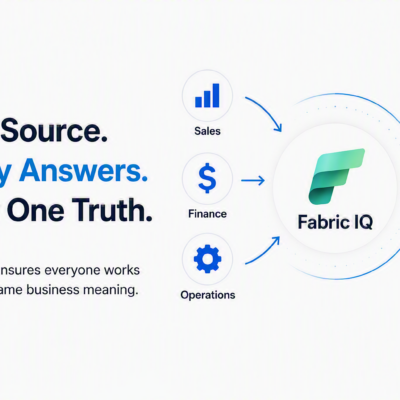
In this case, the Jet Analytics to Microsoft Fabric migration did not simply reproduce that environment on a different platform. Business Central remained a core operational source, while Fabric introduced a centralized data foundation, continuous ingestion pipelines, standardized data curation, governed semantic models, and Power BI reporting. The result was reduced dependence on manual preparation, more consistent information across the organization, and reporting that moved from days to near real time.
The lesson is not that every established component should be replaced. It is that migration creates the opportunity to preserve the business knowledge that still matters while redesigning the architecture around it.
A Successful Migration Changes the Operating Model
When an organization moves from Jet Analytics or another established environment to Microsoft Fabric, continuity is important, but it is not the same as progress. Success should not be measured only by how many pipelines, models, and reports continue to run.
A stronger measure is whether the new environment removes duplicated logic, unnecessary data movement, overlapping models, manual reconciliation, and dependencies that add effort without adding value.
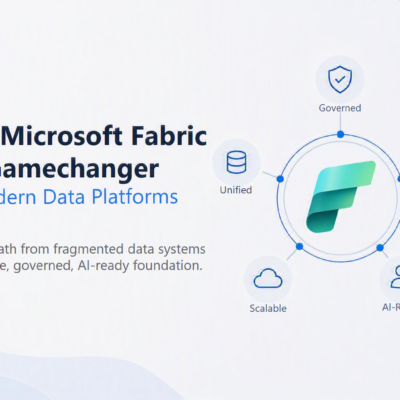
Microsoft Fabric brings together OneLake, Delta tables, semantic models, and integrated analytics capabilities within a unified data foundation. The opportunity is not simply to move existing workloads onto that foundation, but to redesign how data is prepared, governed, supported, and extended.
Reaching a new platform completes the migration. Changing how the organization manages, trusts, and extends its data is what makes the move worthwhile.