Microsoft Foundry: Turning AI Ideas into Real Business Applications
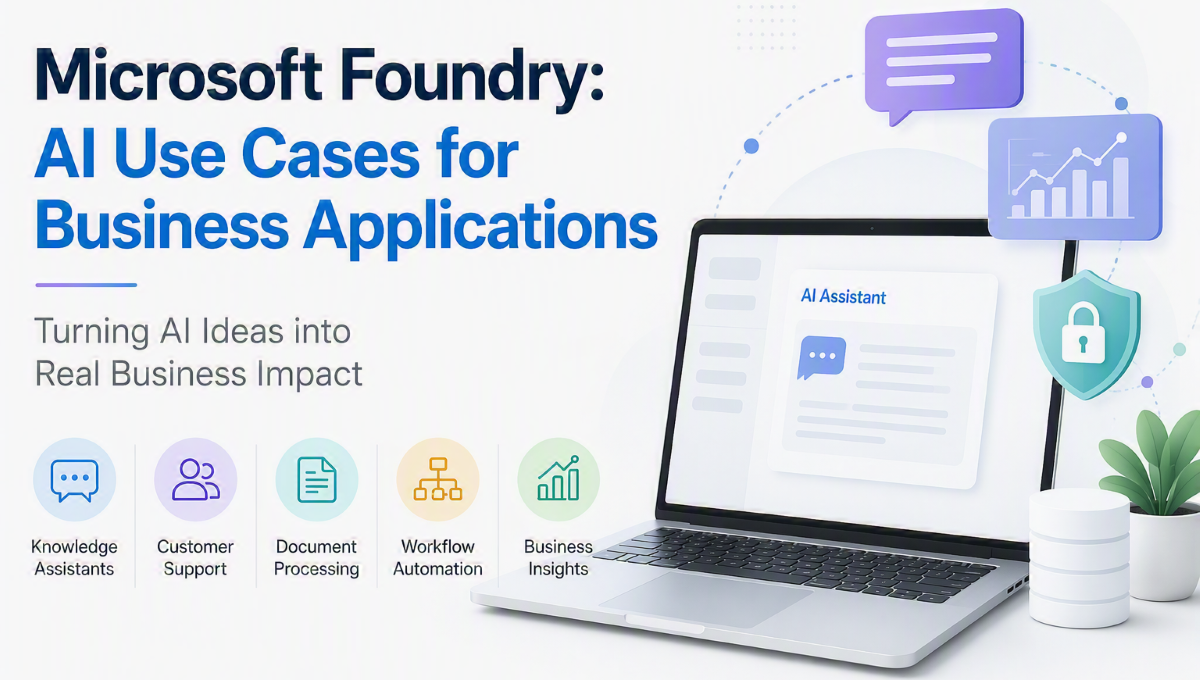
Update – July 2026: Azure AI Foundry is now referred to as Microsoft Foundry. This article has been updated to reflect the current Microsoft naming while retaining references to Azure AI Foundry where helpful for readers familiar with the earlier name. The examples below focus on Microsoft Foundry business applications and how organizations can use AI to support real operational workflows.
AI is now a common topic in business discussions. Almost every business we’ve interacted with in the last year has either started or is planning an AI project. Leaders know that they can’t ignore AI any longer, but many organizations are still figuring out how to shift from testing ideas to putting actual applications in practice. Teams try out new concepts, run pilots, and experiment with models. Converting these experiments into safe and scalable AI applications is often the difficult part.
This is where platforms like Microsoft Foundry are becoming more relevant. Businesses are starting to find systematic ways to create and implement enterprise AI applications that integrate with their current systems rather than viewing AI as a collection of discrete experiments.
What is Microsoft Foundry?
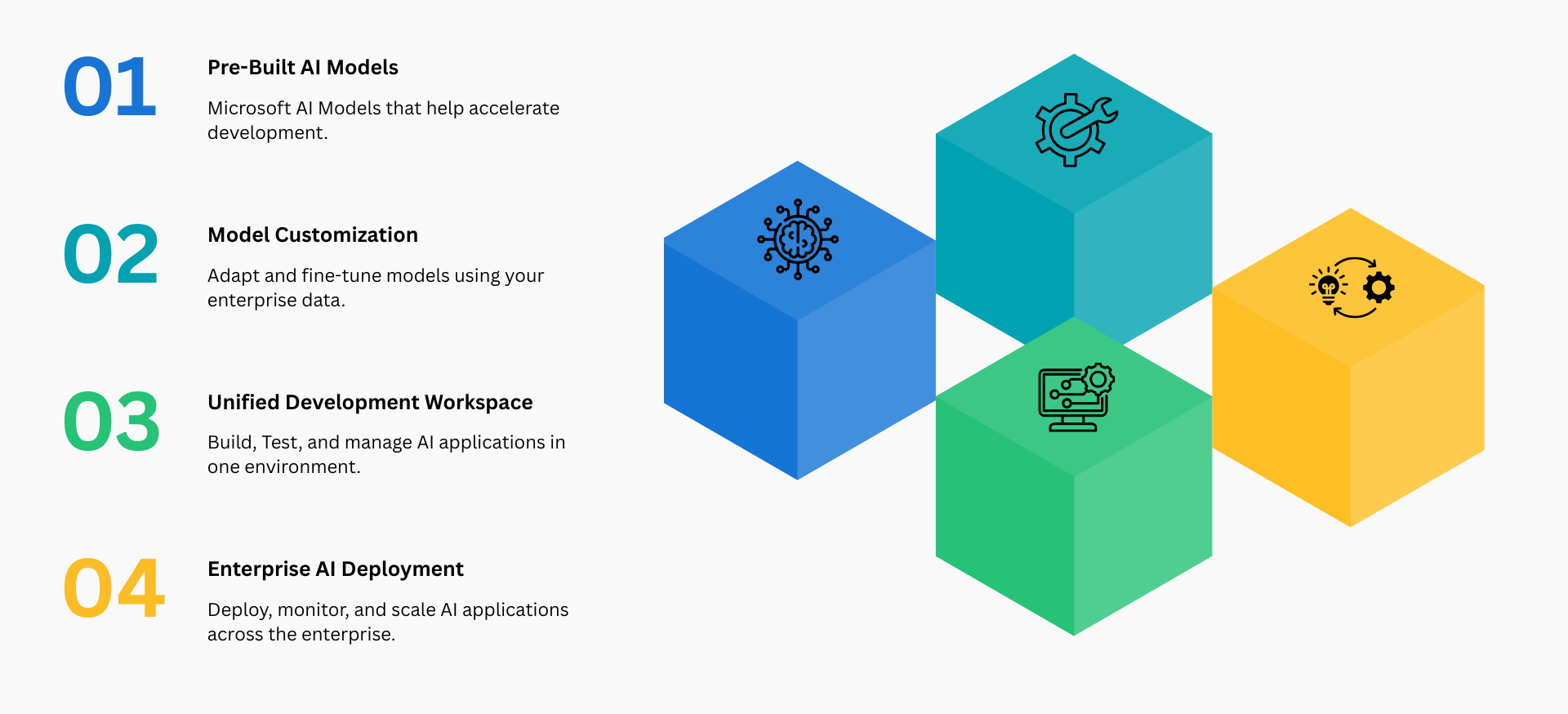
Microsoft Foundry, formerly Azure AI Foundry, is a Microsoft platform that helps organizations design, build, and manage AI applications using their data and existing systems. For many teams, Microsoft Foundry business applications provide a practical way to connect AI models with enterprise data, workflows, and governance. It offers tools for creating AI models, connecting enterprise data, and securely implementing AI applications, within the Azure ecosystem. This helps teams create intelligent applications more quickly and with better governance.
With Microsoft Foundry, teams can build applications like AI assistants, automation tools, and data analysis solutions. By combining advanced AI models with enterprise data, organizations can move from isolated experiments to scalable enterprise AI solutions that improve actual business functions.
For many organizations exploring Microsoft Foundry, the true benefit comes from how easily it can integrate AI capabilities with existing business processes and workflows.
TL;DR: Think of Microsoft Foundry as a toolbox that helps businesses turn AI ideas into real, scalable business applications quickly.
How Microsoft Foundry Solves Practical Business Challenges
Most AI projects don’t start with ambitious plans. Usually, they start with a simple problem or some daily frustration that slows teams down. These opportunities often result from simple questions within the business, particularly when processes feel slower or more difficult than they should.
Microsoft Foundry can support all kinds of use cases, but in reality, most organizations exploring it (and similar tools) start with straightforward, practical day-to-day use cases like these:
Why does my support team spend so much time searching through documentation?
In many SaaS companies, support and customer success teams depend on product documentation, internal guides, and past support tickets to answer customer questions. The challenge? All that information is spread out, making it tough to quickly find accurate answers.
With Microsoft Foundry, you can build an AI assistant trained on your company’s internal documentation and knowledge bases. All of a sudden, support teams get answers in seconds instead of minutes. This reduces the time spent searching for information and improves customer response times.
These types of projects are popular because the benefits are immediate. Microsoft Foundry simplifies this by securely connecting your AI models directly to your internal documentation and knowledge systems.
Why isn’t my customer success team catching churn risks earlier?
Customer success teams usually have plenty of signals such as product usage data, support interactions, customer engagement data, and more. Nevertheless, connecting these signals to spot potential churn risks takes a long time.
By building an AI model with Microsoft Foundry, you can examine these patterns and highlight accounts that may need attention. By recognizing early warning signs, customer success teams can take proactive steps to assist customers and improve retention.
The true value here is focus. With all your data and AI tools together, your team knows exactly where to direct their efforts.
Why are my teams still spending hours every week on reporting?
Even with modern data platforms and analytics tools, teams still end up exporting data and assembling weekly reports for leadership. This is a tedious and time-consuming task.
With Microsoft Foundry, you can create applications that analyze your business data and generate summaries automatically. Your teams can focus on what matters the most and make quicker, better decisions.
This is often the starting point for organizations because it cuts down manual work and gives greater clarity, and a direct improvement in productivity. With the application, connect directly to your data sources, let it do its work, while your teams can focus on higher-value tasks.

Bringing AI Ideas to Life
While the potential of AI is exciting, turning ideas into something that works in your business takes more than just choosing the right model.
No matter the use case, you need to connect your AI to your company’s data, integrate it with your existing systems, and make sure everything is running perfectly and securely. That’s not something you can improvise.
That’s where Microsoft Foundry comes in. It provides your team with a single place to build, test, and deploy AI projects. As a result, no more scattered pilot projects or experiments. With the right tools, your team can actually make AI a working part of your business.
However, getting AI ready for production still requires careful planning, strong data integration, and focused on the details.
That’s what we do at VNB Consulting. We help businesses identify the best opportunities for AI, create solutions that fit your needs, and implement them using Microsoft Foundry. Whether it’s integrating your enterprise data or deploying AI apps that scale with your business, we’re here to take you from early trials to meaningful results.
Many organizations today are exploring how platforms like Microsoft Foundry can help them move beyond AI experimentation and build business applications that actually support their operations. If your organization is planning to move from AI experimentation to implementation, explore our Microsoft Foundry Services to see how VNB Consulting helps design, develop, deploy, and govern AI agents and intelligent applications.
Let’s start a conversation about how your AI initiatives can move from experimentation to real business value.